
Core Components of Blockchain: Nodes, Blocks, and Transactions
Blockchain & Web3

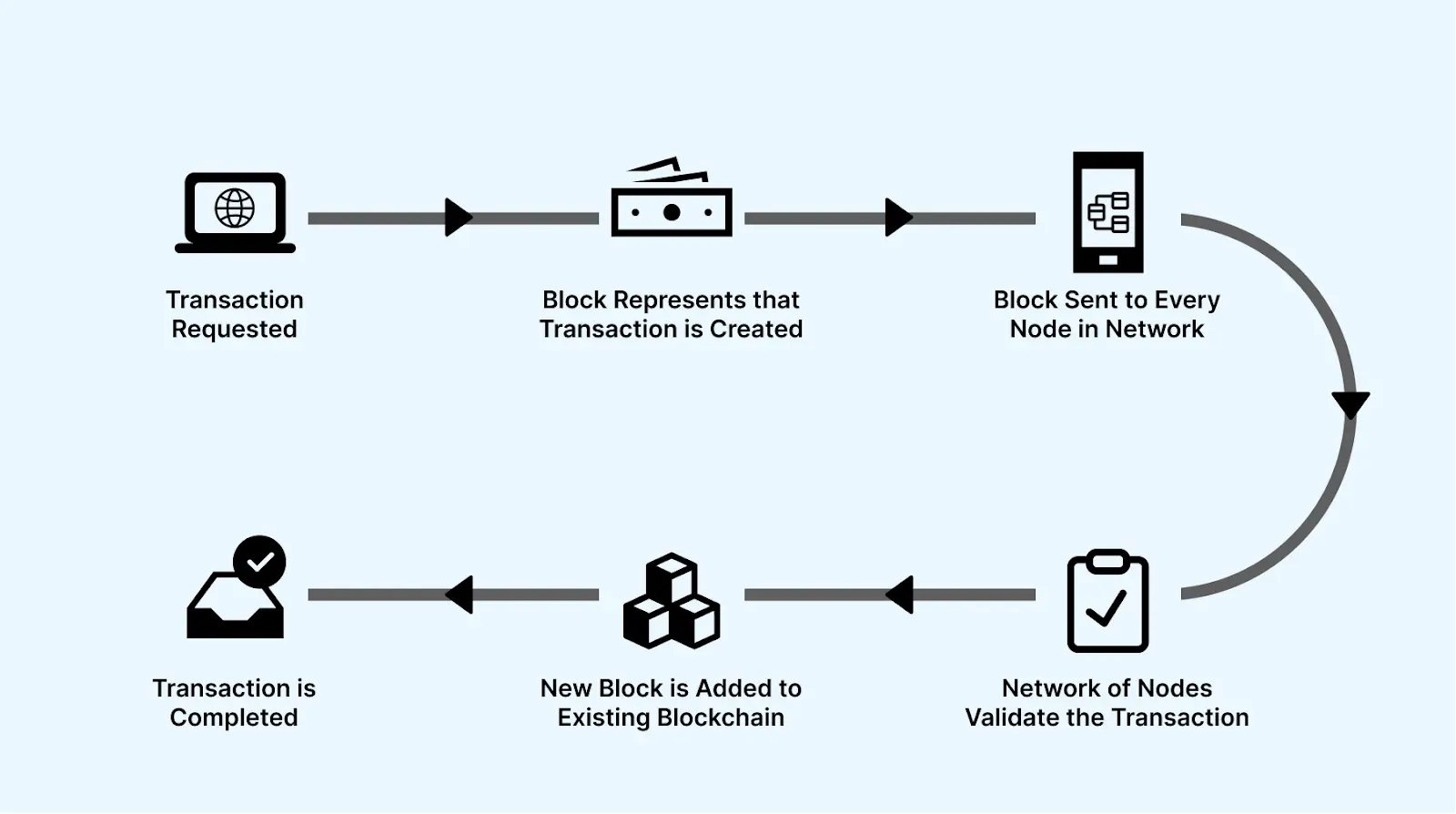
Blockchain is revolutionizing industries by offering transparency, security, and decentralization. At its core, blockchain relies on three main components: nodes, blocks, and transactions. These elements form the foundation of blockchain systems and power their unique features, like smart contracts, which drive automation and innovation.
In this post, we’ll break down these fundamental pieces, how they interact, and why they’re critical to blockchain ecosystems.
The Building Blocks of Blockchain
1. Nodes: The Backbone of the Network
Nodes are devices, like computers or servers, that participate in the blockchain network. They store, validate, and share blockchain data.
Types of Nodes:
Full Nodes: Keep a complete copy of the blockchain and independently validate transactions.
Light Nodes: Store minimal data and rely on full nodes for validation.
Mining/Validator Nodes: Engage in consensus processes like mining (Proof of Work) or staking (Proof of Stake).
Roles in the Ecosystem:
Decentralization: Prevents a single point of failure.
Security: Validates data and ensures tamper-resistance.
Transparency: Shares the blockchain's state across the network.
2. Blocks: The Building Units of Blockchain
A block is a structured data unit that holds information in a secure, decentralized, and immutable way.
Block Structure:
Header: Includes metadata like the previous block’s hash, a timestamp, and cryptographic details.
Body: Contains validated transactions.
Key Features:
Linked Architecture: Blocks reference the hash of the previous block, forming an unbreakable chain.
Data Integrity: Any attempt to alter a block invalidates all subsequent ones.
3. Transactions: The Lifeblood of Blockchain
Transactions are the actions or exchanges recorded on the blockchain.
Components of a Transaction:
Input: References the sender’s previous outputs.
Output: Specifies the recipient and the value transferred.
Digital Signature: Ensures authenticity and security.
Transaction Flow:
Broadcast: The transaction is shared across the network.
Validation: Nodes verify its authenticity and funds availability.
Inclusion: Validated transactions are added to a block and confirmed.
Smart Contracts: Programmability on Blockchain
Smart contracts are self-executing programs stored on the blockchain. They automatically run when predefined conditions are met.
Example Use Cases:
Automating payments.
Enforcing agreements.
Powering decentralized applications (dApps).
Smart contracts are triggered by transactions, validated by nodes, and recorded in blocks. They’ll be explored further in an upcoming post about their role in transforming industries like finance, art, and gaming.
Why These Components Matter
Blockchain’s core components work together to create systems that are:
Secure: Cryptographic links and distributed validation ensure data integrity.
Transparent: Every node shares and accesses the same data.
Decentralized: Eliminates central control, distributing trust across the network.
Immutable: Changes to the blockchain are nearly impossible once data is recorded.
Real-World Blockchain Ecosystems
Bitcoin (BTC): Focuses on secure, immutable value transfers. It uses Proof of Work for security, offering simplicity and reliability for peer-to-peer payments and digital asset storage.
Ethereum (ETH): Introduced smart contracts for creating decentralized applications (dApps). Post-Merge, it uses Proof of Stake for scalability and energy efficiency.
Layer-2 Solutions (e.g., Polygon): Scale existing networks by handling transactions off-chain, reducing fees and increasing speed. Ideal for gaming and high-transaction apps.
Enterprise Blockchains (e.g., Hyperledger): Tailored for business needs, prioritizing privacy and compliance over decentralization.
Next-Gen Platforms (e.g., Solana, Polkadot): Focus on speed, interoperability, and scalability for diverse use cases like high-frequency trading and cross-chain communication.
Conclusion
Nodes, blocks, and transactions form the foundation of blockchain, powering its ability to deliver transparency, security, and decentralization. Understanding these core elements is essential to unlocking the potential of blockchain and Web3 innovations.
In the next post of this series, we’ll explore Consensus Mechanisms: PoW, PoS, and Beyond, diving into how blockchains achieve agreement and maintain trust.
Stay tuned for more as we continue building your blockchain expertise. Together, we’ll explore how blockchain is shaping the future of technology, one block at a time.
To dive deeper into this topic, check out the full article on Medium. Let’s keep building smarter, safer systems, one step at a time.
Core Components of Blockchain: Nodes, Blocks, and Transactions