
Using AI Agents to Enforce Architectural Standards
AI Security & Development

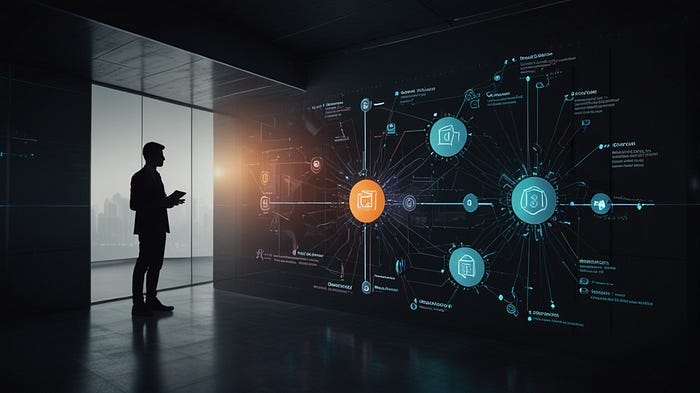
Designing a great system is only the beginning. Keeping it consistent, secure, and maintainable? That's where AI agents are stepping in.
In a recent post, Choosing Your AI Stack: Deep Dive into Top Agent Frameworks (2025), we explored the foundations. Today, we dive into how AI agents can enforce architectural standards in real-world pipelines, and why this is becoming essential.
The New Reality: Complexity, Drift, and AI Intervention
By 2025, software architectures have become even more complex. Systems evolve fast. Developers move faster. And with every sprint, a quiet threat grows: architectural drift.
Boundaries blur. Services entangle. Small decisions, made quickly, start eroding long-term quality.
Now, AI agents are moving beyond coding copilots. They're stepping into governance, reviewing architectures, enforcing policies, and continuously coaching teams across the SDLC.
This post looks at how LLMs and autonomous agents are being embedded into modern pipelines to uphold architectural intent. We’ll cover use cases, tool integrations, new protocols like MCP and A2A, the rise of CodeOps, risks, and ready-to-use prompts.
AI as a Policy Enforcer in Modern Pipelines
AI adoption has moved beyond simple productivity boosts. Enforcement is the next frontier.
CI/CD workflows today often include:
Pull request reviews where agents catch architectural violations (like UI layers accessing databases directly).
Design reviews where AI analyzes diagrams and flags risks or gaps.
Slack or Teams bots that answer architecture questions and spot inconsistencies.
These aren’t passive checks. They’re embedded, contextual, and interactive, offering suggestions, references, and sometimes proposing fixes.
Example:
A GitHub Action triggers an AI agent that reviews a PR and posts targeted feedback to Slack:
"Detected service X bypassing the API gateway."
This “policy-as-prompt” model is becoming a powerful way to scale architectural governance without slowing teams down.
Detecting Architectural Drift Early
Architectural drift usually isn't intentional. It creeps in as systems and teams grow.
AI agents help catch:
Boundary violations: Services communicating directly across domains.
Unauthorized dependencies: Unapproved libraries slipping in.
Topology mismatches: Discrepancies between documented and actual system maps.
Prompt Example:
"Analyze this dependency graph. Identify services that violate domain boundaries or use unauthorized APIs."
By checking regularly, AI agents help maintain structural integrity before small issues become systemic.
Catching Anti-Patterns Across Code, Diagrams, and IaC
AI agents are versatile reviewers across:
Infrastructure-as-Code (IaC): Detecting misconfigurations.
Source Code: Spotting business logic leaking into UI layers.
Architecture Diagrams: Flagging missing failovers or risky dependencies.
Prompt Example for IaC:
"Review this Terraform file for VPC and subnet violations. Ensure no public IPs are assigned."
Prompt Example for Diagrams:
"Check this PlantUML diagram. Flag any direct connection from web tier to database violating 3-tier rules."
They review intent, not just syntax, making them valuable teammates during design and code reviews.
Practical Prompts for Enforcing Best Practices
Here are high-ROI areas where AI enforcement works best:
Microservice Boundaries
Prompt: "Flag any service calls that bypass the API gateway."Data Flow Constraints
Prompt: "Is any PII logged or stored outside compliance boundaries?"Layered or Hexagonal Architecture
Prompt: "Does the controller delegate only to services, without accessing repositories?"Logging and Observability
Prompt: "Check for missing structured logs and tracing headers."Diagram Consistency
Prompt: "Compare diagrams with live service telemetry and flag inconsistencies."
These can be embedded into CI pipelines, Slack bots, or design review copilots.
CodeOps: Codifying Governance with AI
CodeOps started as a way to speed up development using modular, reusable code.
Today, it's expanding into governance: encoding compliance, architectural rules, and policy checks as versioned artifacts, managed like code.
Prompt Example:
"Evaluate this PR against policies defined in /architecture/policies/microservices.yaml."
With CodeOps:
Architectural rules are treated as code.
AI agents can dynamically interpret and enforce policies.
Governance becomes part of everyday development, not a last-minute check.
This closes the loop between policy definition, enforcement, and feedback, all inside the developer workflow.
CodeOps vs. Vibe Coding: Why Rules Matter
As AI tools get better, “Vibe Coding” has emerged, developers prompting their way through tasks, relying heavily on AI intuition.
It’s fast. Sometimes clever. But often risky.
CodeOps creates the balance:
Developers enjoy AI-accelerated creativity.
Architects maintain real-time governance.
Let the AI help build, but make sure it stays within the right lines.
Embedding AI in Your Toolchain
To make AI enforcement seamless, embed agents where teams already work:
GitHub Actions + LangChain: PR evaluation against architecture standards.
Slack + Claude: Context-aware architecture advice directly in chat.
Obsidian + LLM Plugins: Validation of ADRs and design notes.
Notion + Agent Orchestration: Tracking architecture changes automatically.
Context-aware agents, integrated into everyday tools, deliver the highest value.
Shared Context: The Role of MCP and A2A
Better enforcement comes when agents understand the broader architecture and collaborate.
Model Context Protocol (MCP):
MCP delivers structured real-time context, boundaries, deployment maps, design rationale, directly to agents.
Example:
An agent reviewing a PR knows from MCP that Service X is part of a legacy system slated for deprecation.
Agent-to-Agent Protocol (A2A):
A2A lets agents collaborate. One agent detects a boundary violation; another checks compliance impacts.
Together, MCP and A2A turn agents into proactive, context-smart teammates.
Risks and How to Manage Them
Even good enforcement tools come with risks:
False Positives: Misreading code or diagrams.
Hallucinations: Imaginary violations.
Fatigue: Developers ignoring irrelevant suggestions.
Overreach: Undermining trust if AI acts without transparency.
Mitigations:
Scope prompts tightly to clear contexts.
Demand explainable outputs citing source lines.
Allow human override and feedback loops.
Require human review on critical changes.
AI enforcement should feel like coaching, not micromanagement.
Conclusion: Building with AI, Not Around It
Architecture is no longer just a one-time design task. It's a living system that needs continuous care.
AI agents can be the immune system that protects it, scaling architectural coaching, spotting drift early, and enforcing design principles in real time.
Treat these agents like teammates: give them clear roles, feedback, and trust, but always supervise thoughtfully.
Key Takeaways
AI agents now enforce architecture standards across CI/CD, PRs, and reviews.
Prompt-driven checks catch drift and anti-patterns early.
Embed AI into Slack, GitHub, Obsidian for seamless workflows.
MCP and A2A protocols enable smarter, context-aware agent collaboration.
CodeOps codifies governance, balancing AI creativity with oversight.
Use scoped prompts, explainability, and human feedback to prevent fatigue.
Let’s not just design great architectures, let’s nurture them, with AI as our trusted partners.
🔹 Want the full deep dive? Check out my full article on Medium.
🚀 Stay tuned for more posts in AI Security & Development! Follow for more insights on securing AI, cloud, and Web3.
AI Security & Development - AI table of contents included.